Virtual Reality Solutions
Immersive VR experiences for Every Industry.
Silversea Media develops virtual reality (VR) and digital twin solutions that help organisations understand and interact with complex environments before any operational challenges arise.
Schedule a DemoENTERPRISE VR STACK
Built for safer training, spatial planning, and smarter operations.

TRAIN SAFELY
Practise high-risk tasks in controlled simulations before real deployment.

EXPLORE VIRTUALLY
Walk through facilities, spaces, and infrastructure without being onsite.

CONNECT TWINS
Link VR environments with digital twin data and Spatial AI workflows.

OPTIMISE FASTER
Use analytics and feedback to improve the experience after launch.
Virtual Reality
Designed For Practical Use
Contrary to popular belief, virtual reality is not just about the visual spectacle. In many cases, the most effective VR solutions are designed to address specific operational challenges.
Silversea Media has developed VR applications that allow teams to train in realistic environments without exposure to physical risk, as well as systems that enable managers to explore facilities or infrastructure remotely when on-site access is limited. In these situations, clarity, realism, and usability are often more valuable than visual complexity.
When connected to digital twins and Spatial AI systems, these environments become more than visual experiences — they become practical tools for planning, training, and decision-making across enterprise operations.
ABOUT THE TECHNOLOGY
What Businesses Use Virtual Reality For
Virtual reality delivers the greatest value when it helps organisations understand complex environments and processes before they are experienced in the real world.
In practice, businesses commonly use VR to:
Train teams in simulated environments
where mistakes can be made safely without real-world consequences
Visualise complex facilities, equipment, and workflows
to improve planning and operational understanding
Reduce operational uncertainty
by allowing teams to explore systems and procedures before implementation
Communicate complex ideas more effectively
using immersive environments to explain processes, products, or infrastructure
An Award-Winning VR
Company with a
Practical Perspective
Silversea Media has received recognition through several industry awards, including honours from EduTECH Asia, Business Excellence, and the Telly Awards. These acknowledgements reflect the innovation and quality behind our immersive technology work.
We believe VR should integrate naturally into existing operational workflows and decision-making processes, not remain a standalone showcase. Our goal is to create solutions that are intuitive, reliable, and consistently useful in real-world enterprise environments.
A Unified Platform
for Immersive
Environments
Our MetaTwin 3D platform forms the foundation of how Silversea Media delivers virtual reality solutions. It brings together capabilities that are often fragmented across multiple systems, including spatial capture, 3D modelling, immersive environment development, interactivity, and analytics.
Through MetaTwin 3D, organisations can connect immersive environments with digital twins, operational data, and Spatial AI workflows — enabling experiences that are designed for exploration, training, and long-term operational value rather than one-off demonstrations.
Virtual Reality Use Cases Across Industries
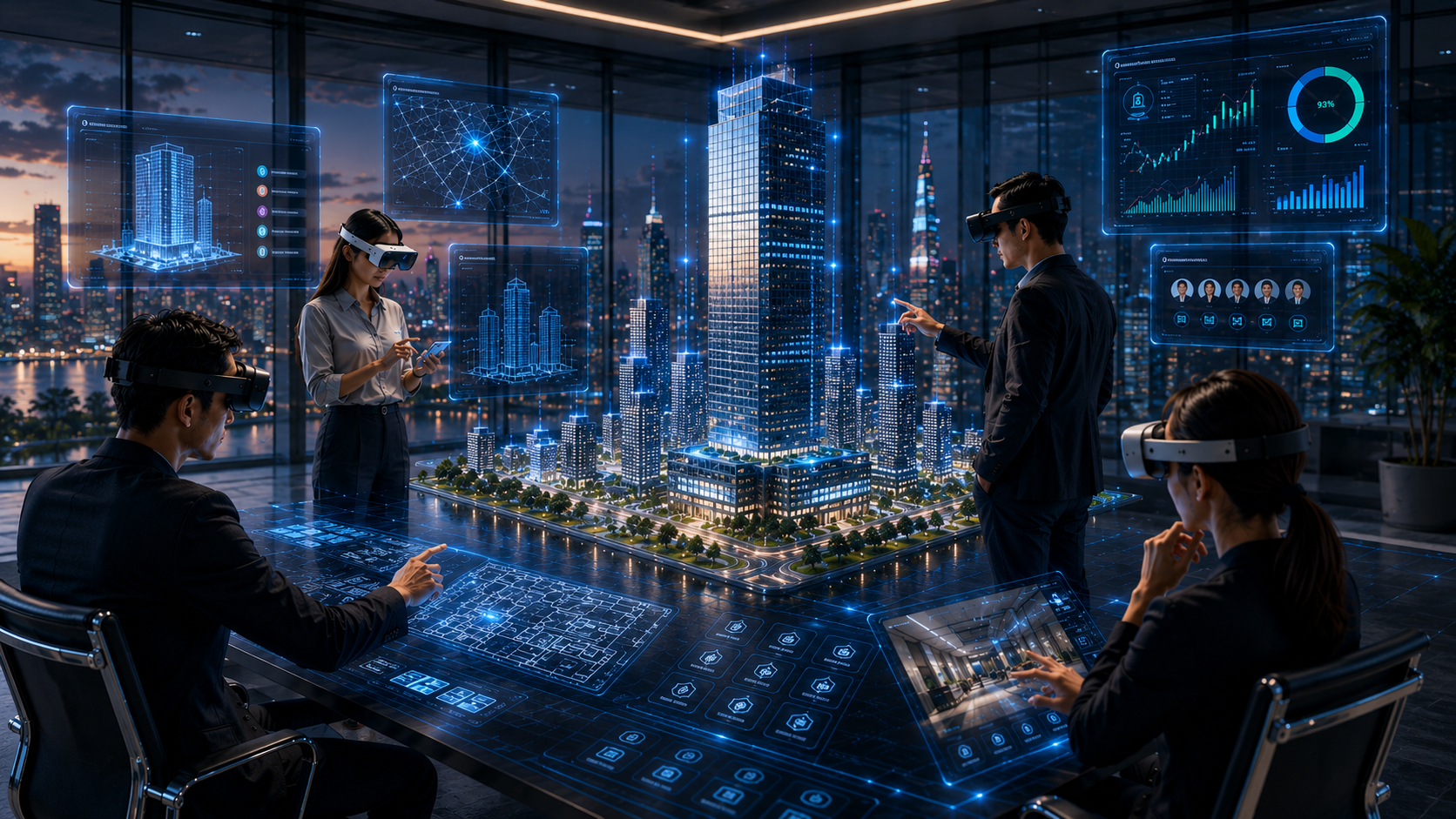
Property & Built Environment
With immersive VR walkthroughs connected to digital twins and Spatial AI systems, teams can explore properties, coordinate stakeholders, and evaluate facilities remotely. This improves spatial understanding, collaboration, and decision-making throughout the lifecycle of a project.
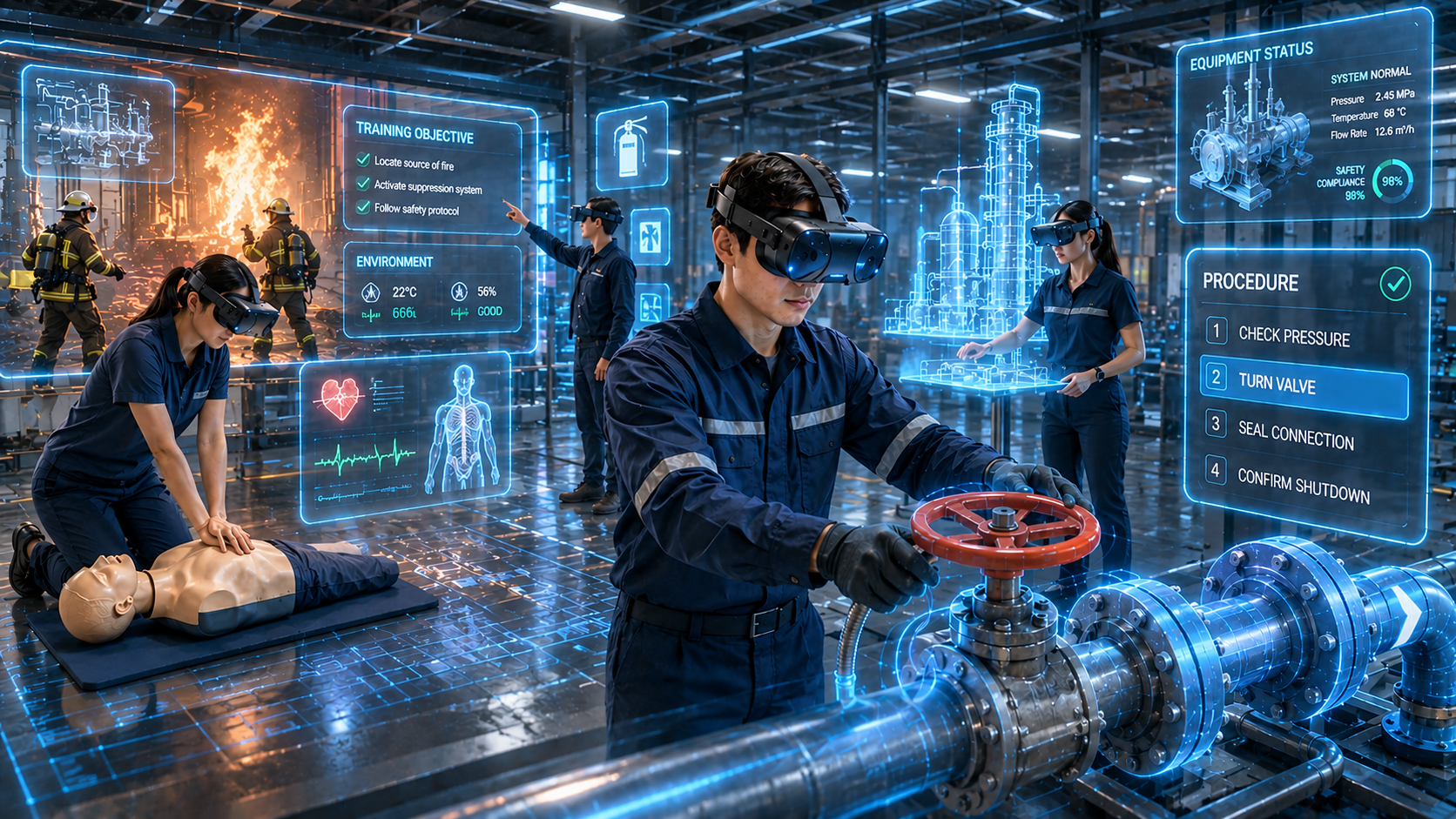
Education & Training
Training is one of the areas where VR consistently delivers strong value. Complex procedures such as safety drills, medical simulations, equipment handling, and technical training can be practised in realistic environments without real-world risk.
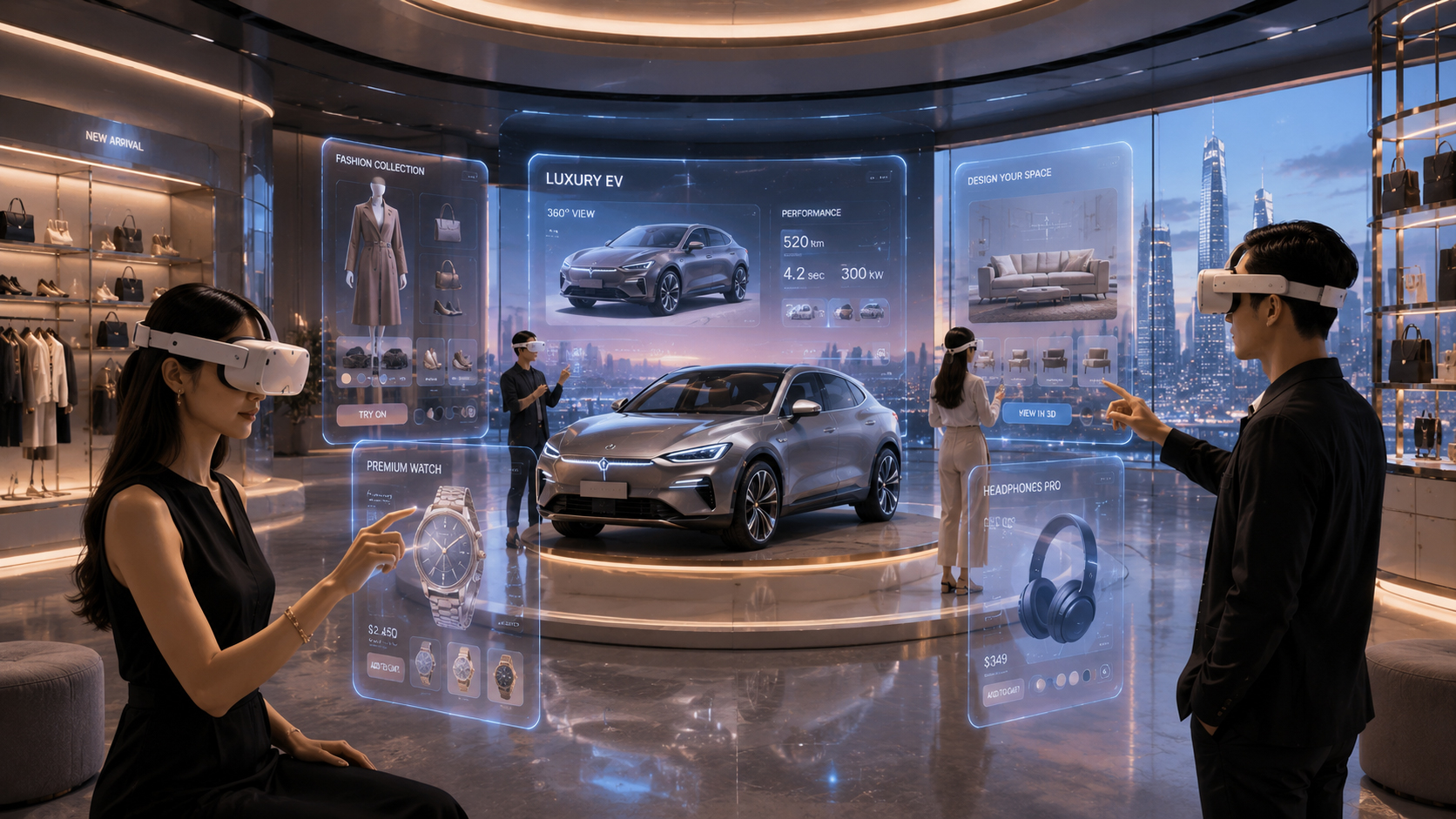
Retail & Showrooms
Through virtual showrooms, brands can present products in immersive environments without the physical limitations of traditional retail spaces. Businesses can showcase a wider range of products, create interactive experiences, and allow customers to explore offerings independently. Virtual environments also extend reach by enabling customers to engage with products from any location and at any time.
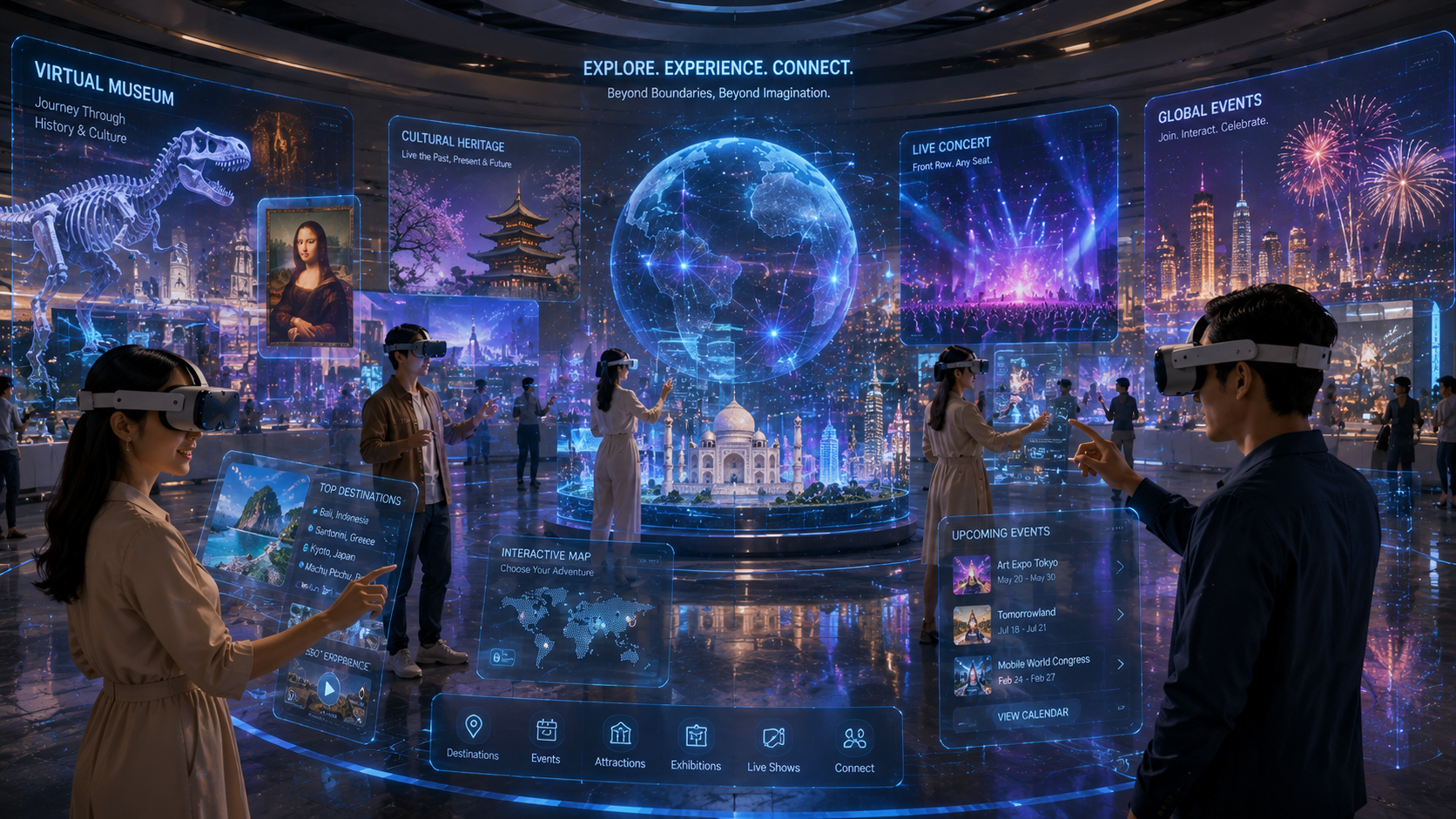
Events, Tourism & Attractions
VR opens new possibilities for audience engagement beyond physical locations and time-bound events. From virtual exhibitions to immersive tourism experiences, organisations can extend the lifecycle of events and create interactive experiences that reach global audiences.
How We Approach
Virtual Reality
Virtual reality development for enterprise environments requires flexibility. Operational requirements, technical constraints, and user needs often evolve throughout the project lifecycle. For this reason, our development process is designed to remain adaptable while maintaining technical precision.
Discovery and Strategy
Every project begins with a discovery phase to understand the operational challenges the organisation is trying to address.
Spatial Capture and 3D Environment Creation
We then develop the digital environment through a combination of LiDAR-based spatial scanning and high-fidelity 3D modelling.
Integration with Spatial AI Systems
When connected with operational data, VR environments can become part of a broader Spatial AI ecosystem. This integration enables organisations to simulate workflows, visualise infrastructure, and monitor assets within immersive environments that mirror real operational conditions.
Immersive Experience Design
User interaction design is critical to ensure that the experience remains intuitive and aligned with real operational tasks.
Deployment and Continuous Optimisation
Deployment marks the beginning of an ongoing optimisation process. By analysing usage patterns and system performance, we continuously refine the VR environment to improve usability, operational value, and long-term effectiveness.
SPATIAL AI SYSTEMS
Virtual Reality as Part
of Spatial AI Systems
Virtual reality becomes especially powerful when it is connected to a larger spatial intelligence system.
At Silversea Media, VR environments are often integrated with digital twins, XR technologies, and artificial intelligence to form Spatial AI platforms that mirror real-world environments.
These systems allow organisations to explore infrastructure spatially, simulate operational scenarios, train teams in realistic environments, and test decisions before implementing them
VR becomes the environment where users can experience and interact with Spatial AI simulations directly.
Explore Virtual Reality Solutions for Your Organisation
If your organisation is exploring virtual reality for training, operations, facility management, or customer engagement, request a demo to see how immersive technology can support real operational needs.
At Silversea Media, we work with organisations to design practical virtual reality solutions that integrate into everyday workflows rather than existing as standalone demonstrations.