Top 5 Augmented Reality Companies in Singapore Delivering Real-World Impact
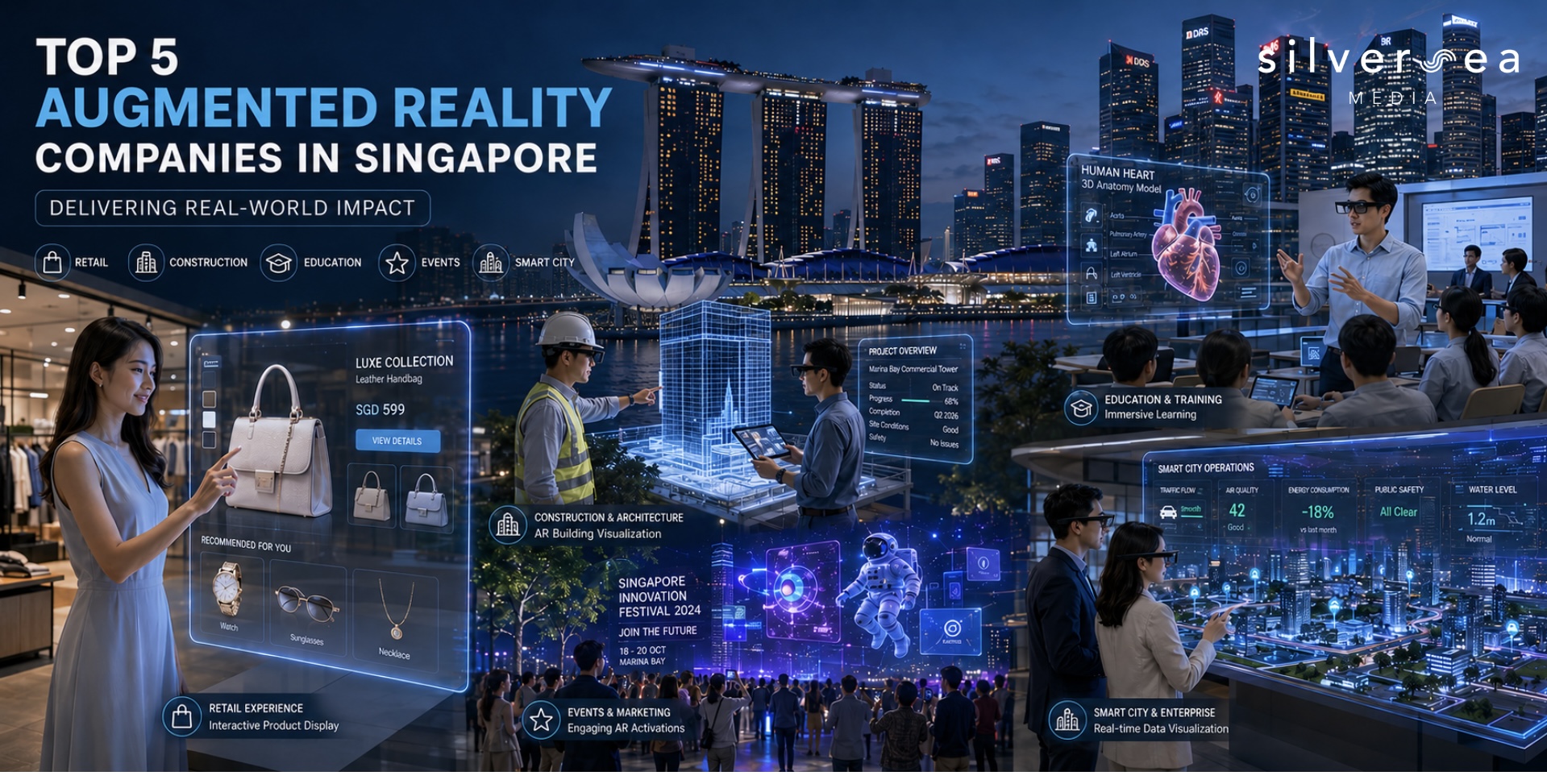
I have watched enough augmented reality pitches to know how this usually goes. Fancy visuals. Big words. Someone says “immersive” five times. Then, six months later, the project quietly disappears. But every now and then, you see AR used where it actually counts: on factory floors, in training sessions, inside workflows where mistakes are not theoretical. They are expensive.
This list is about those companies.
Some names on this list of the best augmented reality companies are familiar. You have probably seen them on conference stages or case-study PDFs. Others are much quieter. They don’t market as loudly, but they ship tools that people keep using. And honestly, those tend to be the ones worth paying attention to.
This is not ranked by hype, funding rounds, or who mentions “metaverse” the most in their messaging. It is based on perceived impact. Emphasis on perceived, because no list like this is perfectly objective. Still, each company included on this list of the top augmented reality companies seems to push AR past novelty and closer to usefulness, which is where things get interesting.
If you are looking at AR for training, operations, marketing, or digital twins within Singapore or the wider Southeast Asia region, this list may help you cut through the noise. Or at least rethink what “good AR” actually looks like in practice. Stick with me. I will try not to oversell anything.
Top Singapore Augmented Reality Companies
The following is a curated list of Singapore-based augmented reality companies.
Silversea Media comes first, not just because we are writing this, but because our full-stack approach and regional track record tend to put us in the middle of real operational use cases, not just pilots.
1. Silversea Media – Full-Stack AR Innovation
Silversea Media may not be a household name, but in enterprise AR circles, we are quietly reshaping operations. Our full-stack platform handles everything from scanning physical spaces to creating fully immersive digital twins.
Why We Stand Out:
- MetaTwin 3D Platform: Think of it as a Swiss Army knife for AR: scanning, modeling, virtual environments, analytics.
- Tailored Experiences: Training, retail, events, you name it - we have probably built a custom solution.
- Real Impact: Businesses using our solutions report improved efficiency, safer training, lower operational risk and increased sales.
Industries Served:
- Education, property, manufacturing, retail, tourism, events and built environment.
Recognition:
- Winner of the Singapore Business Review (SBR) Technology Excellence Awards in 2020 and 2025
- NTUC May Day Award 2025
- The Telly Awards (as a winner of the 42nd and 46th Annual Telly Awards)
- The Silver Award for Best AR/VR Solution at the EduTECH Asia Awards 2019
2. VividWorks – AR for Retail, Museums, and Learning
VividWorks has been around long enough to remember when AR was still treated as a novelty. Their strength is restraint. They don’t force AR everywhere. They place it carefully.
You’ll often find their work in museums, classrooms, or guided spaces where explanation matters.
Why They Stand Out:
- Thoughtful spatial storytelling
- Strong institutional relationships
- AR that supports learning rather than distracting from it
Industries Served:
Museums, education, tourism, retail.
3. Hiverlab – Immersive Media & Experiential AR
Hiverlab’s work feels ambitious. Sometimes bold. Occasionally a little experimental. But it’s almost always grounded in physical space.
They blend AR with immersive media in ways that feel designed for people, not just screens.
Why They Stand Out:
- Location-aware AR experiences
- Strong sense of place and atmosphere
Industries Served:
Experiential marketing, exhibitions, public installations.
4. MeshMinds – AR for Storytelling & Social Impact

MeshMinds approaches AR less like a tool and more like a medium. Their projects often explore culture, memory, and social themes.
This may not suit every commercial use case. But when it works, it resonates longer than most campaigns.
Why They Stand Out:
- Emotion-led AR storytelling
- Strong cultural and educational focus
Industries Served:
Education, exhibitions, public engagement.
5. Zappar Singapore – Scalable AR for Brands
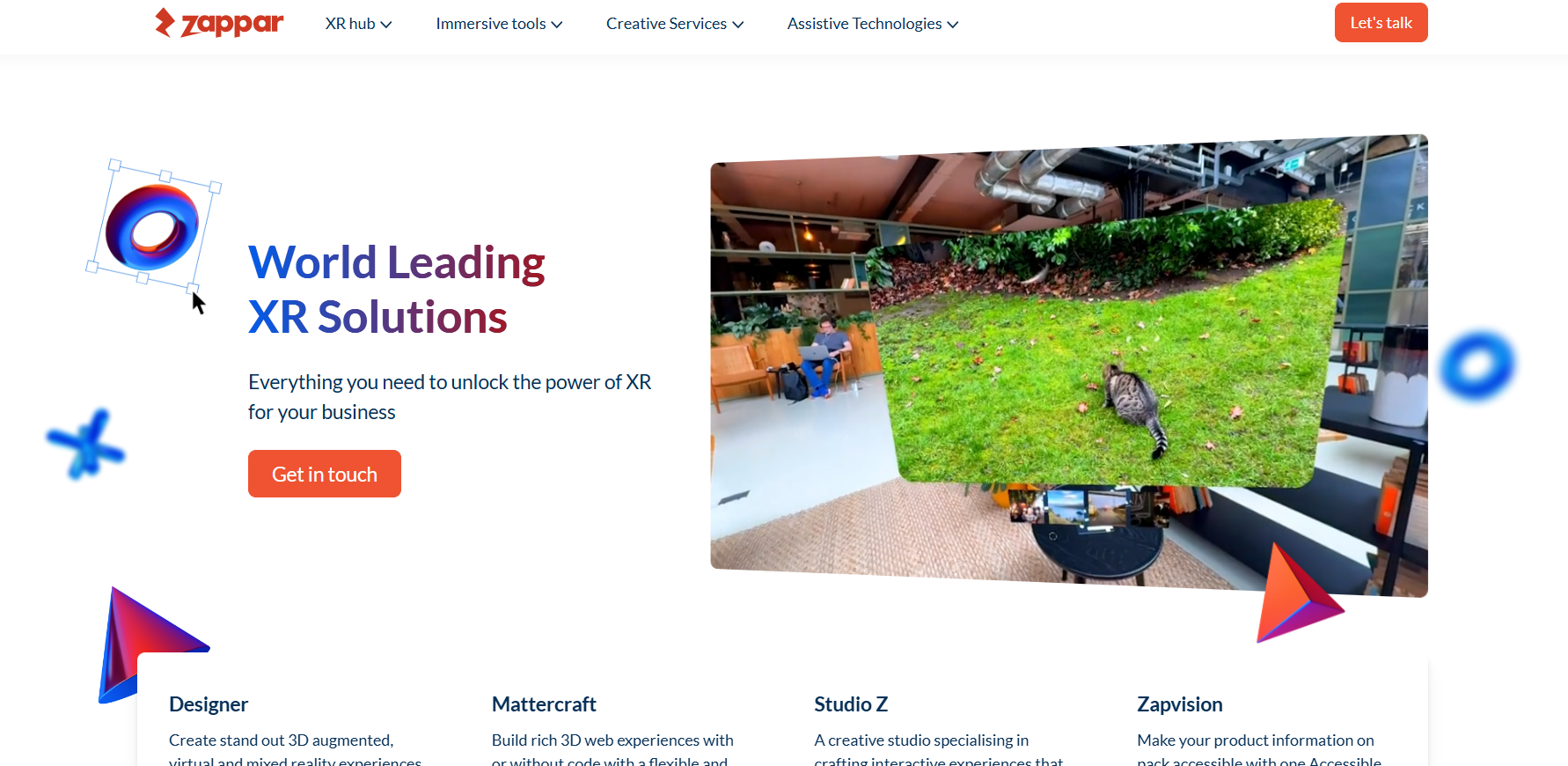
Zappar is globally known, but their Singapore team plays a big role in regional deployments. Their strength is speed and scale.
If a brand wants AR that works across packaging, retail, and mobile without heavy development, Zappar often shows up.
Why They Stand Out:
- No-code AR creation
- Campaigns that are easy to roll out and measure
Industries Served:
Retail, marketing, events.
What Sets Top Augmented Reality Companies Apart
Before we get into names, a quick reality check: not all AR is created equal. Some companies focus on making cool visuals. Others focus on making things work.
The Singapore AR companies that are worth paying attention to usually have a few things in common:
Full-Stack Solutions:
A lot of stronger players here don’t just build visuals. They handle scanning, modeling, interaction, deployment, and sometimes analytics.
You might not need all of it, but when projects scale, having fewer vendors often means fewer things breaking at the worst possible moment.
Industry-Specific Expertise:
I have noticed that companies claiming to serve every industry often struggle to serve any of them deeply.
A digital twin for a logistics hub behaves nothing like an AR experience for a museum. The studios that understand those differences usually produce work that sticks.
Awards (Useful, But Not the Whole Story)
Awards don’t guarantee success, but in Singapore’s relatively small ecosystem, they often signal consistency.
That said, I have also seen award-winning projects quietly shelved. So, consider recognition a hint, not proof.
Customizable & Interactive Experiences:
People remember experiences, not slideshows. The best augmented reality studios focus on interactivity. Whether it’s a training simulation, a digital twin, or a metaverse environment, the engagement factor usually determines whether the solution drives results or just looks cool.
Operational & ROI Benefits:
Beyond the wow factor, the top AR vendors often deliver measurable benefits. Faster training, fewer mistakes, real-time facility monitoring - these are not optional extras. They are what separates AR that works from AR that is mostly marketing fluff.
Key Benefits of Partnering with Leading AR Vendors
Let’s get practical. What do you actually get if you go with the best augmented reality companies?
Enhanced Training & Safety:
You can simulate high-risk environments safely. Employees may actually retain more knowledge because they experience it rather than just read about it.
Operational Efficiency:
Digital twins let you see workflows in real-time. Predictive insights may highlight bottlenecks before they become expensive mistakes.
Customer & Stakeholder Engagement:
Interactive experiences, whether in-store, at an event, or online, help build trust and engagement. It’s subtle, but people respond to interactivity.
Cost Reduction & ROI:
Virtual setups reduce physical costs and accelerate processes. It is not magic; it is measurable.
How Businesses Can Choose the Right AR Partner
Choosing an AR partner is not just picking the flashiest demo. A few things may help guide your choice:
- Expertise & Recognition: Look for augmented reality vendors with awards and a track record. But also read case studies; sometimes small augmented reality studios can deliver more personalized solutions.
- Full-Stack Capabilities: End-to-end services reduce friction, but only if the company actually executes well.
- Customization: Your industry, workflow, and goals matter. A cookie-cutter solution rarely works.
- ROI & Impact Measurement: Ask how success will be measured. Engagement metrics are nice, but operational improvements matter too.
Final Thoughts
If you zoom out a bit, one thing becomes pretty clear: AR itself is not the headline anymore. What matters is what people do with it once the demo ends.
The companies that feel genuinely worth watching are not always the flashiest. In fact, some of them are almost boring on the surface. But they’re solving real problems: shortening training time, reducing mistakes, and helping teams understand complex spaces without guesswork. That kind of impact doesn’t always look exciting, but it adds up fast.
It is also fair to say this: AR is not a silver bullet. In the wrong hands or in the wrong context, it may turn into an expensive experiment that never quite lands. A polished experience can still fail if it doesn’t fit how people actually work. On the flip side, something simple and slightly rough around the edges may end up being the thing teams rely on every day.
What ties the companies on this list together is a certain practicality. They tend to treat AR as a tool, not a spectacle. When it works well, it does not demand attention but quietly supports the job at hand. That’s not always great for marketing, but it is usually great for adoption.
If you are evaluating AR partners, it helps to look past the visuals. Ask what’s still in use six months later. Ask what didn’t work. Those answers are often more revealing than any showcase video.
At its best, AR can make work clearer, safer, and sometimes even a little more human.